North Texas is one of the hardest places in the country to own a roof. The metroplex sits in an active hail corridor, summer deck temperatures are punishing, and the same seasonal swing that moves foundations also works on everything fastened to the structure above. Roofs here do not usually die of old age; they get hit.
That also makes it one of the easiest categories in which to be sold something you do not need. After every significant storm the metroplex fills with crews going door to door, and homeowners are asked to sign paperwork on their porch about a roof nobody has properly inspected. This page is written to make you harder to sell to — whoever you eventually hire.
Telling real hail damage from a sales pitch
Genuine hail damage to an asphalt shingle looks like a bruise: a soft, roughly circular impact where the granules have been knocked away and the mat underneath is exposed or dented. It is randomly distributed, it appears on the slopes that faced the storm, and it usually shows up on soft metal too — gutters, vents, flashing, the air-conditioning fins. That corroboration matters, because soft metals dent when hail is large enough to matter.
What is not hail damage: granules in the gutter on their own (shingles shed granules throughout their life), scuffs in a straight line (that is usually foot traffic or a ladder), blistering (a manufacturing or ventilation issue), and cracking that follows the shingle edges (age and thermal cycling). A roof can be at the end of its life without having been hit, and a roof can be hit without being at the end of its life. Those are different conversations with different answers.
The other reason the distinction matters is that an insurance claim is not free. A denied or withdrawn claim still appears in your history. Having somebody competent look first, and tell you honestly whether there is a claim worth filing, is worth more than a fast yes.
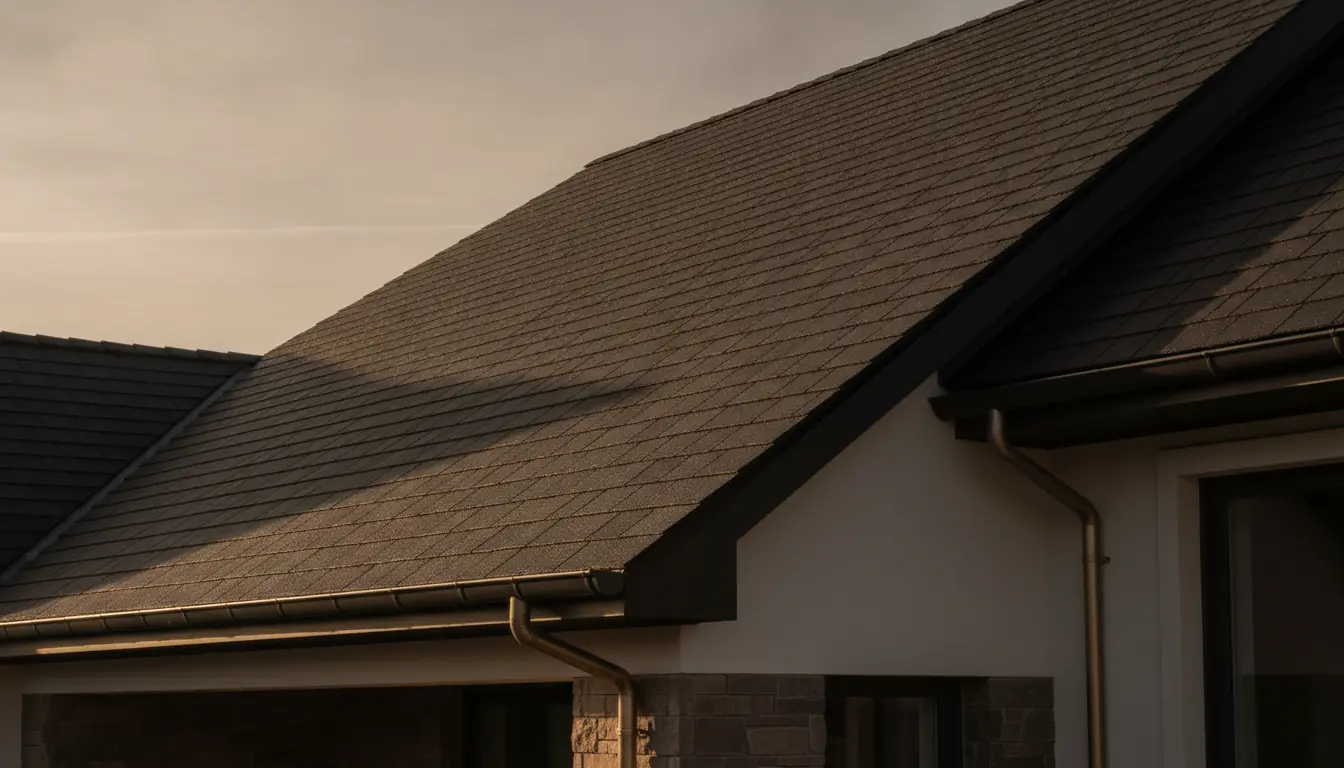
How a storm claim actually runs
Every carrier differs and your policy governs, so treat this as the general shape rather than as advice about your coverage. What is consistent is the order and who holds each step.
Independent inspection
Someone competent gets on the roof and documents what is there — slope by slope, with photographs, including the soft metals. You should receive that documentation whether or not you file.
Decide whether to file
This is your decision, not the contractor's. It weighs the extent of damage against your deductible and your claims history. Anyone pushing you past this step is serving themselves.
Carrier assigns an adjuster
The adjuster inspects on behalf of your insurer. Your contractor can and generally should be present, so the same roof is being discussed by both parties at the same time.
Scope and settlement
The carrier issues a scope of what it will cover and at what value. Disagreements at this stage are normal and are resolved with documentation — photographs, measurements, and code requirements that apply to the repair.
Work scheduled and completed
Materials ordered, tear-off and replacement done, decking assessed once the old roof is off. Rotten or delaminated decking is a common genuine addition at this point.
Final documentation
Completion paperwork and any supplement for work that could not be seen before tear-off. You should end up with photographs of the deck, the underlayment and the finished roof.
The parts of a roof nobody sells you
A roof is an assembly, and the shingle is only its outermost layer. When a replacement is done properly, several things underneath get attention that a price-driven job skips — and because they are invisible afterwards, they are the easiest place to save money at your expense.
The decking is the first. Once the old roof is off, the sheathing is visible for the only time in a decade or more. Soft spots, delamination and previous leak damage should be replaced, not covered. Ask how deck replacement is priced before work starts, so a genuine finding does not feel like an ambush.
Underlayment and the vulnerable details come next. Valleys, eaves, penetrations and wall intersections are where roofs actually leak — not in the middle of a field of shingles. Self-adhering membrane at valleys and around penetrations, correctly lapped flashing at walls and chimneys, and new pipe boots rather than reused ones are what separate a roof that lasts from one that merely looks finished. Pipe boots in particular are a common failure point in this climate, because the rubber degrades under sustained UV long before the shingles do.
Ventilation is the part most often left exactly as it was, including when it was inadequate to begin with. A roof assembly needs balanced intake at the soffit and exhaust near the ridge. Get it wrong and the attic runs hotter, the shingles age faster from beneath, and moisture accumulates in winter. Replacement is the natural moment to correct it, and it is comparatively cheap while the roof is open.
Material choices, honestly compared
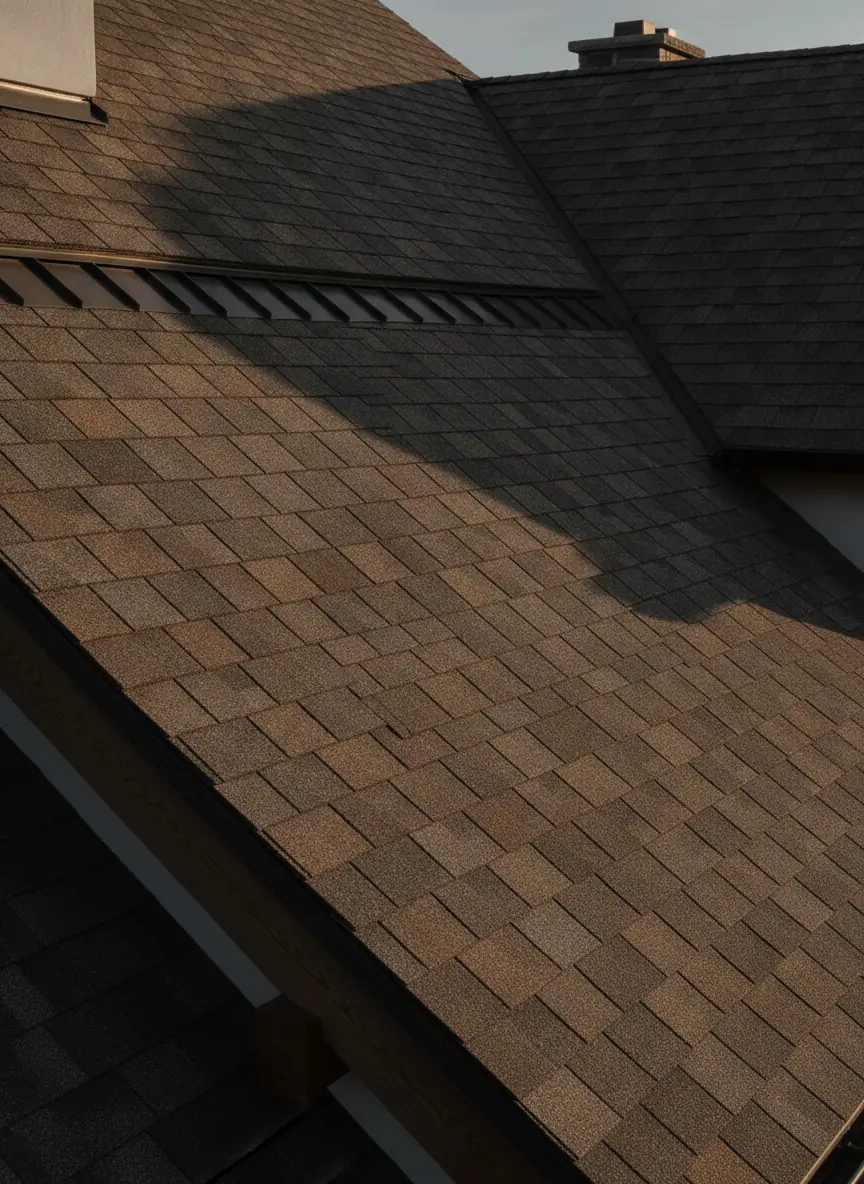
Most North Texas roofs are asphalt shingle, and for good reason. The real decision is usually which class of asphalt shingle rather than whether to switch material entirely.
| Option | Typical service life here | Hail behaviour | Worth considering when |
|---|---|---|---|
| 3-tab asphalt | Shortest of the asphalt options | Least resistant; damages at smaller stone sizes | Budget-driven replacement, or matching an existing roof on a partial |
| Architectural (laminate) asphalt | The regional default | Better than 3-tab; still damages in a significant event | Most homes — the balance of cost, appearance and performance |
| Impact-resistant (Class 4) asphalt | Similar to architectural, with a tougher mat | Rated to resist a standardised steel-ball impact test | Hail-corridor homes, and owners intending to stay long term |
| Standing-seam metal | Longest by a wide margin | Dents rather than fractures; largely cosmetic damage | Long horizons, modern architecture, low slopes |
| Tile / slate | Very long | Can crack under large stones; individual pieces replaceable | Architecturally specific homes; requires structural capacity |
Class 4 refers to performance in a standardised impact test, not a guarantee against damage. Some carriers offer premium considerations for impact-resistant roofing — that varies by insurer and policy, so confirm it with yours rather than assuming it.
Repair or replace
Both are legitimate answers. The right one depends on the roof's age, the extent of the problem, and whether the damage is systemic.
Repair
Choose it when
Localised damage on a roof with meaningful life left — a failed pipe boot, storm-lifted shingles on one slope, flashing at a single penetration.
Watch for
Colour and profile matching on an aged roof is imperfect. Ask to see how the repair will blend before agreeing.
Partial replacement
Choose it when
One slope is damaged and the rest is sound, and the material can still be matched.
Watch for
Insurers and homeowners often disagree here. Matching becomes harder as a roof ages and product lines change.
Full replacement
Choose it when
Damage is across multiple slopes, the roof is near end of life, or repeated repairs are accumulating.
Watch for
This is the moment to fix ventilation and decking properly. Doing the roof again without correcting those repeats the problem on schedule.
What moves the price of a roof
- Pitch and complexity
- Steep roofs need more labour and safety provision. Valleys, dormers, chimneys and multiple planes all add detail work, which is where roofing labour actually goes.
- Number of existing layers
- Tear-off and disposal scale with what is already up there. A second layer roughly doubles that portion of the work.
- Decking condition
- Unknown until tear-off. Should be priced per sheet in the contract so a genuine finding is not a negotiation.
- Material class
- The step from architectural to impact-resistant is real but usually smaller than homeowners expect relative to total project cost.
- Ventilation correction
- Adding intake or converting to ridge ventilation. Cheap while the roof is open, disproportionately expensive later.
- Flashing, boots and accessories
- New rather than reused. This is a small line that separates a roof that lasts from one that leaks at a penetration in year four.
Questions to ask any roofer
Will you show me photographs of my actual roof, slope by slope?
Before any recommendation. If nobody can show you the damage, nobody has established it.
How is decking replacement priced?
A per-sheet price in the contract turns a surprise into an expected variable.
What underlayment, and what happens at the valleys and penetrations?
This is where roofs leak. A specific answer here tells you a great deal.
Are pipe boots and flashing new?
Reusing degraded boots on a new roof is a false economy that shows up within a few years.
What are you doing about ventilation?
“Leaving it as is” is an answer, but it should be a considered one, not an omission.
Who is doing the work, and are they covered by workers' compensation?
Roofing is the highest-risk trade on a residential site. This question matters more here than anywhere else.
What is the manufacturer warranty, and what voids it?
Material warranties are the manufacturer's, and installation errors and inadequate ventilation are common exclusions. Ask what the workmanship coverage is, separately, and get it in writing.

Where this connects
- Gutters and drainageReplaced or re-hung with a roof, and directly relevant to foundation moisture in this soil.
- Siding and exteriorStorm events rarely damage only the roof — wall claddings and trim are often part of the same claim.
- Insulation and atticVentilation, radiant heat and attic performance — the other half of a roof assembly.
- WindowsAlso commonly damaged in hail events, and often part of the same scope.
- Full home remodelingWhen the envelope is being addressed as part of a wider renovation.
Common questions
- How do I know if hail actually damaged my roof?
- You mostly can't from the ground, and door-knocker urgency is not evidence. We inspect and photograph the roof itself and tell you what's there — including when the answer is 'it's fine.'
- Do you work with insurance claims?
- We document damage thoroughly — photos, measurements and a written scope — which is what a legitimate claim needs. The claim itself is between you and your insurer; our documentation makes it an honest, well-supported one.
- Why does ventilation matter to a roof?
- Attic heat cooks shingles from below — a badly vented North Texas attic shortens roof life measurably. Replacement is the moment to get intake and exhaust balanced right.
Where we do this work
Roofing across the Dallas–Fort Worth metroplex — Plano, Frisco, McKinney, Allen, Prosper, Dallas, Richardson, Irving, Flower Mound, Southlake, Arlington, Fort Worth, Carrollton, Garland, Lewisville, Grapevine, Coppell, The Colony, Little Elm, Wylie, Rowlett, Addison, Celina, Highland Park and the surrounding metroplex.
Free estimate
Planning roofing in DFW?
One experienced contractor, one written scope, one number to call.